CONSULTING
What you believe influences how you work.
Consulting with Dr Sam Casey for professionals and organisations working with children and families.
Trauma-informed practice · Therapeutic play · Reflective practice
Bring the child therapist lens into your work. Look at what children and parents need, what shapes the way your team responds, and how to use therapeutic play in your current role.
Make an Enquiry →WHO WE WORK WITH
Wherever adults and children meet

Schools & Early Learning
Teachers and educators who want to read behaviour as communication — and respond in ways that build trust rather than escalate.

Government & NGOs
Family services, child protection, health and community programs that want an evidence-informed, trauma-aware framework their teams can actually use.

Corporate & Community
Workplaces and community organisations supporting working parents, carers and families.
CONSULTING FOCUS
Three areas we can focus on
You can choose one area or bring them together. The starting point is the work your team does with children and families, and the questions you want to understand more clearly.
Trauma-informed practice
Look at what your team recognises as trauma, what they may miss and how those beliefs affect the questions they ask, what they record and the support they offer.
If someone says, “That child hasn't experienced trauma,” what are they basing that on?
- Which experiences are being taken seriously, and which are being dismissed?
- How do assumptions about parenting or responsibility influence the way a family is understood?
- What might need to change in the team's response, rather than placing every expectation on the child or parent?
This work draws on trauma research and Dr Sam's doctoral research into how beliefs about trauma influence professional practice.
Therapeutic play
Bring the full Play Prescription® framework into your role. Look beneath behaviour, understand the underlying need and choose therapeutic play that fits the child, family and situation.
Rather than asking only, “What activity could we use?”, consider:
- What is the child showing us through their behaviour or play?
- What could the play make room for—connection, expression, problem-solving or practising a particular skill?
- How might the adult's approach or the conditions around the play need to change?
Use child-centred and directive play therapy principles to inform your choices, within your professional role. The purpose is to understand why a play response may fit, not simply collect more activities.
Reflective practice
Look at how your own experiences, beliefs and stress responses shape what you notice in children and parents, and how you respond.
For example, one person may see a parent as disengaged while another sees someone who is overwhelmed. We can ask:
- What are we assuming, and what do we actually know?
- Why does a particular interaction feel difficult or urgent to us?
- How could another way of understanding the situation change our response?
Reflection makes room for both self-compassion and accountability. It is not about blaming staff; it is about noticing what we bring to the work and responding with greater intention.
Four ways to work together
The format depends on what you want to explore and how you want your team to take part.

Speaking and keynotes
Talks for conferences, staff events and professional learning days. Dr Sam brings the child therapist lens to your audience, using examples that connect the ideas to real work with children and families.
We agree the topic and focus beforehand. A talk might look at how adults understand a difficult interaction, what it means to respond differently, or how play can have a clear purpose beyond the therapy room.
This format suits a shared introduction or a focused topic for a larger group. Where the event allows, there is time for questions and discussion.
Team training and professional development
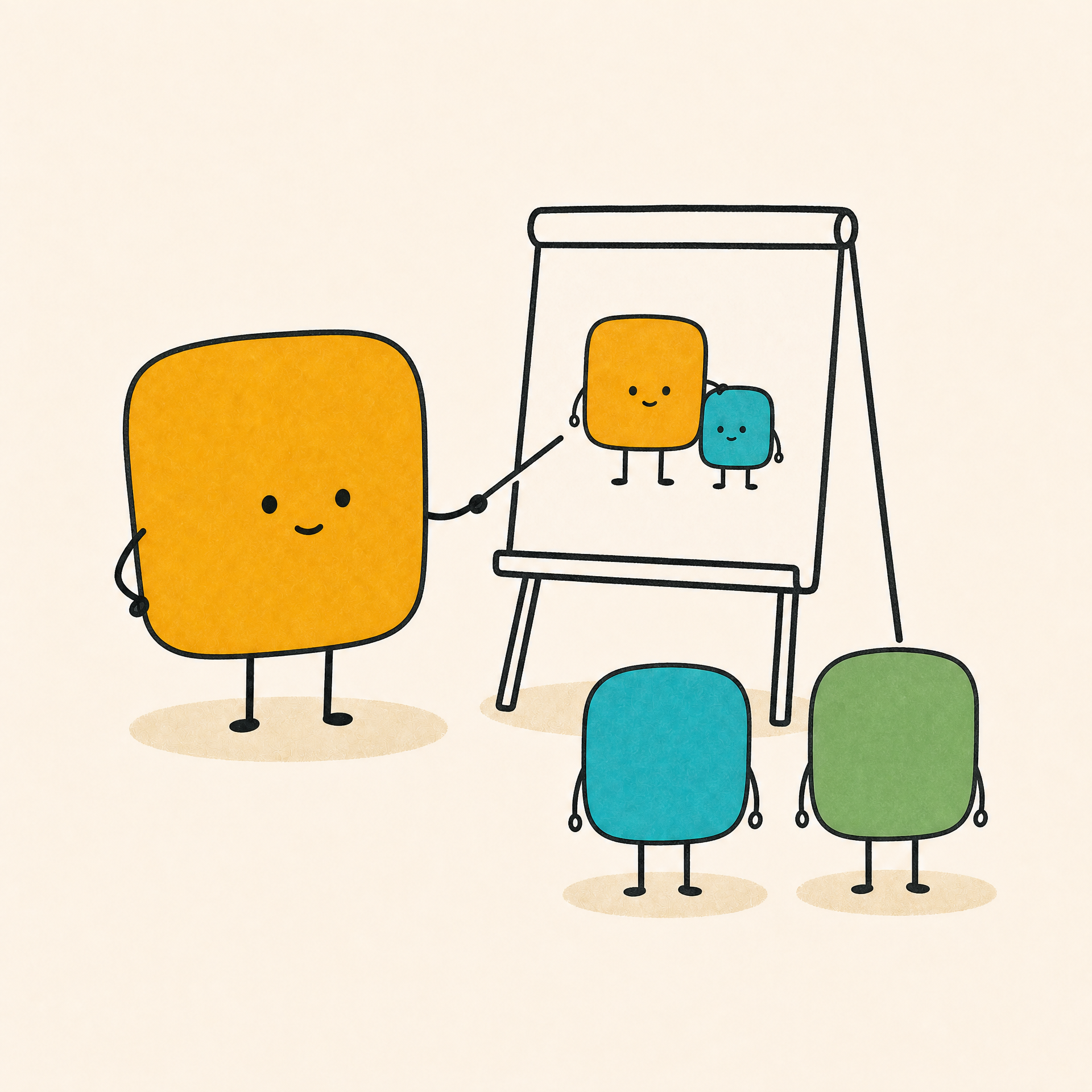
Workshops and learning sessions where staff can move from understanding the ideas to trying them in their own setting.
We use discussion, demonstrations, short exercises and examples from your team's work. Staff can practise looking beneath behaviour, consider a possible play response, compare different ways of understanding a situation and bring questions about what feels difficult.
We agree the learning focus and format with you. This could be a focused workshop, a staff-development day or a series of sessions. The full Play Prescription® Certification is a separate programme.

Case consultation
A space to think through a situation you feel stuck with, or a pattern appearing across your work with children and families.
Bring an example without names or identifying details. We look at what is known, what is being assumed, the child's needs, the conditions around them and how the adults involved are responding. Together, we consider what may need attention and possible next steps within your role.
You can also bring reflections on something you have already tried. Clinical decisions, safeguarding duties and responsibility for the case remain with the relevant practitioners and organisation.
Consulting
Work with Dr Sam to review a particular part of how your team understands and supports children and families.
We start with a question you want to explore. This might involve looking at the language used in records, how staff discuss difficult interactions, where play fits in existing support, or whether the way your team works matches its stated approach.
The work can include a focused review or working sessions alongside your existing team processes. We consider practical changes and questions to take forward, without taking over your team's professional responsibilities.
GETTING STARTED
How we work
- Start with your question. Tell Dr Sam about your setting, your team's role and the issue you want to look at.
- Agree a focus and format. Choose a talk, training, case consultation or consulting work that fits what you need to explore.
- Connect it to practice. Use examples, questions and existing ways of working to consider possible changes and what your team wants to reflect on next.
Use examples without names or details that identify children or families. Clinical decisions, diagnosis and safeguarding duties remain with the relevant practitioners and organisation. This is not about assuming every difficulty is caused by trauma or diagnosing a child from a discussion.
"This course is like no other professional development I have attended. It challenges your own unconscious biases and explores inner child work as a priority before working with parents and children. This is a key element that I believe has been missing with trainings in order to build real authentic connections to build parental capacity."
— PARENTING PRACTIONER

ENQUIRY FORM
Talk about your work
Tell me about your organisation, the work you do and what you would like help with.
Please do not include names or other details that identify children or families.