THE FRAMEWORK
The Play Prescription® Framework
A five-principle framework grounded in psychological theory and evidence-based play therapy principles - giving you the child-therapist lens to prescribe therapeutic play, support healing and growth, and break cycles alongside kids.
WHAT IT IS
A complete practical framework - not just theory.
The Play Prescription Framework - created by Dr Sam Casey - takes cycle-breaking, healing and growth outside the therapy room. It draws on the wisdom of play therapy, psychology and child development, brought together into a practical framework that adapts to you, your role and the kids and parents in your life. Most approaches give you strategies. The framework gives you something deeper: a way to read what's underneath behaviour, an understanding of how your own childhood shapes what you see in the child in front of you, and the ability to prescribe therapeutic play that targets the specific challenge - not generic activities.
The child therapist lens - practical and useable beyond the therapy room.
THE FIVE PRINCIPLES
Five principles. One lens.
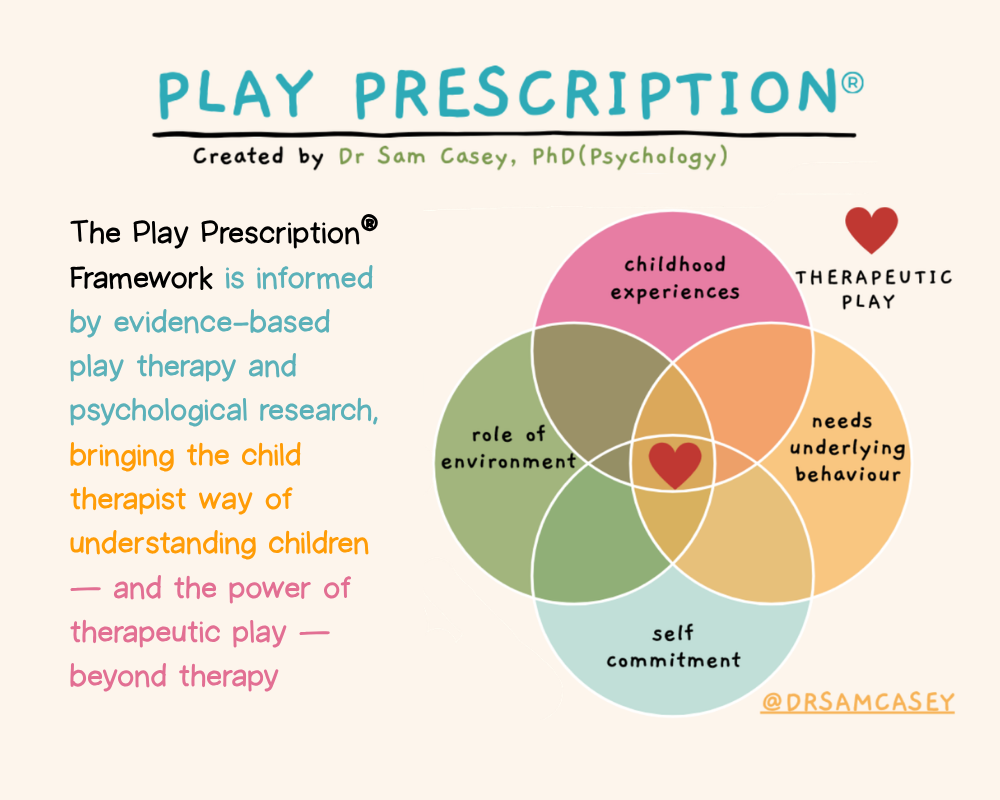
Each principle builds on the last - starting with your own story, and ending with therapeutic play as the place healing actually happens.

Childhood Experiences
Our early experiences shape our lens - for how we see ourselves, others, and the world. The first seven years shape our emotional defaults, attachment patterns form as survival strategies, and we all carry inherited "manuals" for parenting and relationships. Understanding your own story is where the work begins.
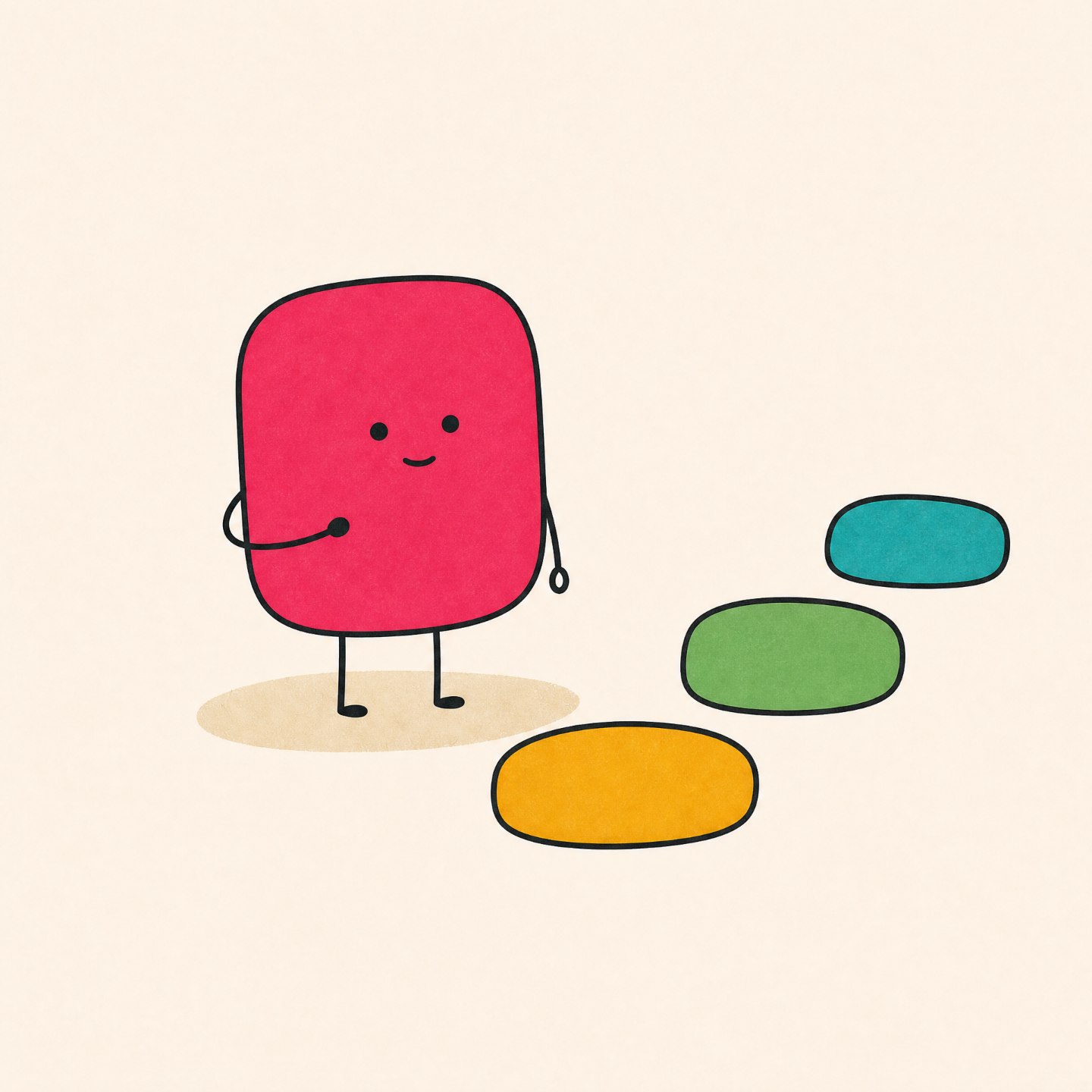
Self-Commitment & Inner Work
How we show up for ourselves - balancing self-compassion with self-accountability. This principle builds psychological flexibility under stress, awareness of inner critic patterns, and the capacity to respond intentionally rather than react automatically. Supporting children will always bring up your own patterns too.
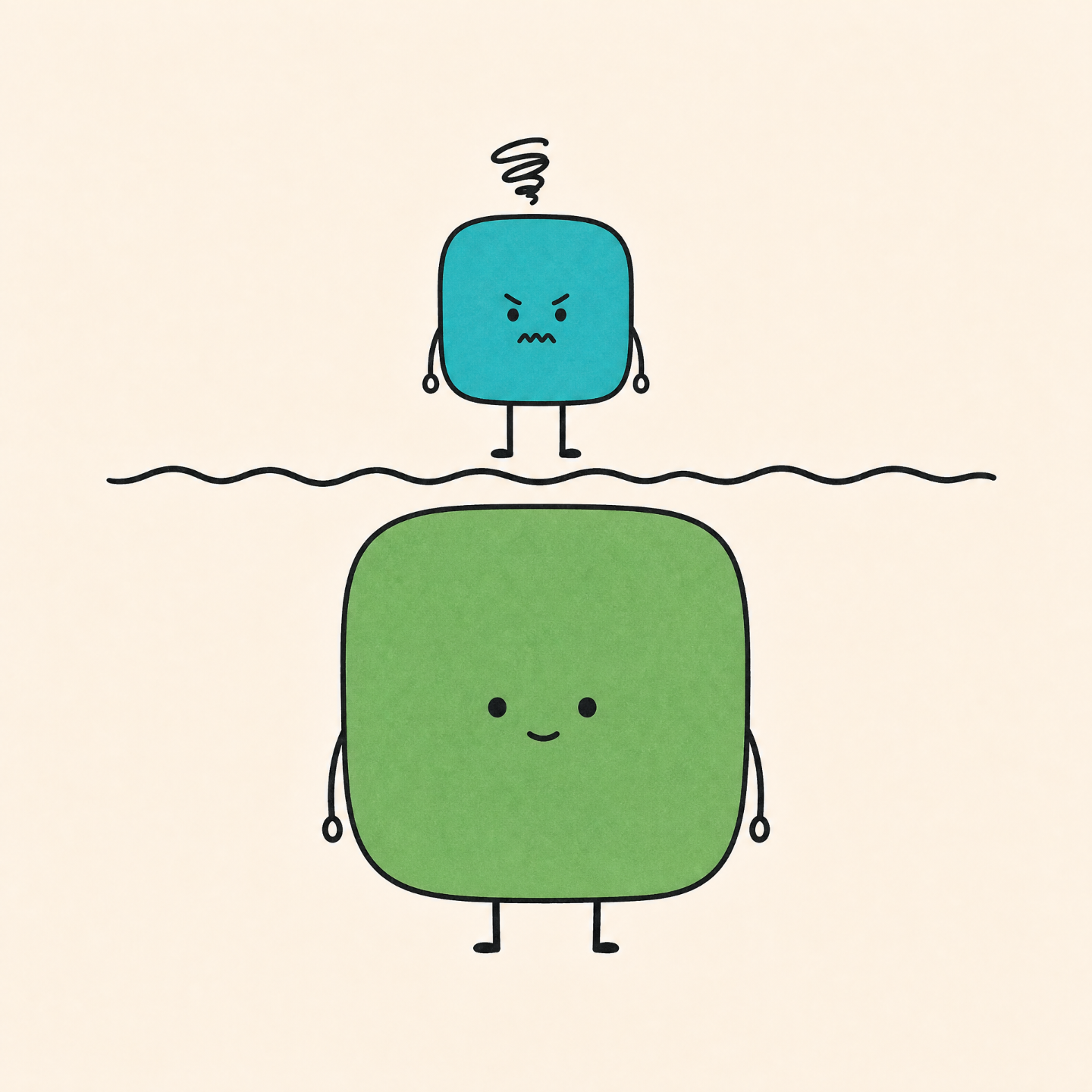
Needs Underlying Behaviour
Behaviour is communication driven by an unmet need. "Challenging behaviour" is adaptation, not defiance. This principle teaches you to read beneath the behaviour with curiosity instead of blame - and to stand with the child against the problem, rather than against the child.

Role of the Environment
Play is how children make sense of the world - and the research backs this up. This principle covers child-centred and directive play therapy philosophies, how to decide which to use, and how to intentionally prescribe therapeutic play for specific challenges such as fears and worries, explosive behaviour, dysregulation and attachment struggles.

Therapeutic Play
Play is how children make sense of the world - and the research backs this up. This principle covers child-centred and directive play therapy philosophies, how to decide which to use, and how to intentionally prescribe therapeutic play for specific challenges such as fears and worries, explosive behaviour, dysregulation and attachment struggles.
HOW IT WORKS TOGETHER
Not five separate ideas. One way of seeing.
You start with your own story (Childhood Experiences), build the capacity to show up intentionally (Self-Commitment & Inner Work), learn to read what's really going on (Needs Underlying Behaviour), shape the conditions around the child (Environment), and bring it all together in the place healing actually happens (Therapeutic Play). Together, the five principles form the child therapist lens a repeatable way to assess what's happening, understand the underlying need, and prescribe play that targets the challenge.
QUESTIONS
Common questions about the framework
Is this play therapy?
Who is the framework for?
What ages does it apply to?
Is it evidence-based?
Do I need any qualifications to learn it?
Ready to learn the framework?
Whether you're a parent, a professional, or an organisation — there's a pathway designed for you.